Advertisement

Tulis ulang artikel berikut ke dalam bahasa Indonesia yang rapi, mudah dipahami, gaya formal pendidikan, minimal 300 kata:

contributed by Iryna Liusik, Early Childhood Educator — Linguistics & Emotional Development

Series note: This is Part 1 of a two-part series: Part 2 offers a one-minute classroom observation routine that helps teachers notice comfort that makes early expression visible before assumptions become records.

Introduction: In early childhood classrooms, the fastest mistake we make is treating silence as a single ‘thing.’ This piece offers a clearer interpretive lens for ‘quiet’ in multilingual learners — not to delay support, but to choose the right kind. 

A Quiet Moment That Isn’t ‘Nothing’ 

During art time, a four-year-old holds a paintbrush but doesn’t paint.

She watches a peer mix colors, her hands tense around the brush. After a minute, her shoulders soften, her eyes follow the brush strokes on paper. She leans in just an inch and whispers a single word to the child beside her. 

To many adults, this looks like ‘nothing happened.’ She’s still a ‘quiet child,’ but to an educator attuned to dual language learners (DLLs) and their development, that whisper and that shift in her body are something else entirely: the earliest visible steps of expression in a new language and a new environment. 

Moments like these are easy to miss in busy classrooms where verbal participation is often treated as the primary indicator of learning. Yet for many multilingual children, expression begins long before full sentences appear. 

It begins in posture, in breath, in proximity and gesture. And sometimes, in a single whispered word. The difference between ‘nothing happened’ and ‘something is starting’ is rarely a child problem; it is usually an adult perception problem. In busy classrooms, perception becomes practice — and practice becomes trajectory. 

Why This Matters Now in U.S. Classrooms 

In the United States, nearly one in three children under age five is growing up with more than one language, and…


Sumber: Baca selengkapnya

Tulis ulang artikel berikut ke dalam bahasa Indonesia yang rapi, mudah dipahami, gaya formal pendidikan, minimal 300 kata: 
	
contributed by Mike Brown, education researcher at preppool.


Every educator has seen it.


A thoughtful, engaged student studies diligently, participates in class discussions, completes assignments on time—and then underperforms on the first major assessment.


The disappointment is visible. Sometimes the teacher feels it just as strongly as the student.


The instinctive explanations are familiar: anxiety, distraction, poor time management, lack of effort. But if this pattern repeats across classrooms and grade levels, it may point to something more structural.


What if first-time underperformance is less about student shortcomings and more about how we design learning?


If we look closely, many learning environments unintentionally reward familiarity over retrieval, coverage over coherence, and comfort over cognitive strain. Students leave review sessions feeling confident—only to discover that confidence was built on recognition, not recall.


That distinction matters more than we often admit.


The Gap Between Knowing and Being Able to Retrieve


In most classrooms, preparation looks something like this:


Students reread notes.


They highlight key passages.


They review slides.


They skim summaries.


These activities feel productive. There is visible effort. There is time invested. There is even a sense of clarity while reviewing.


But recognition is not retrieval.


When information is in front of us, it feels accessible. When it isn’t, the experience changes. Exams and performance tasks require students to produce knowledge independently—sometimes under time constraints, sometimes in unfamiliar formats.


The problem is not that students don’t “know” the material. The problem is that they have not practiced retrieving it often enough.


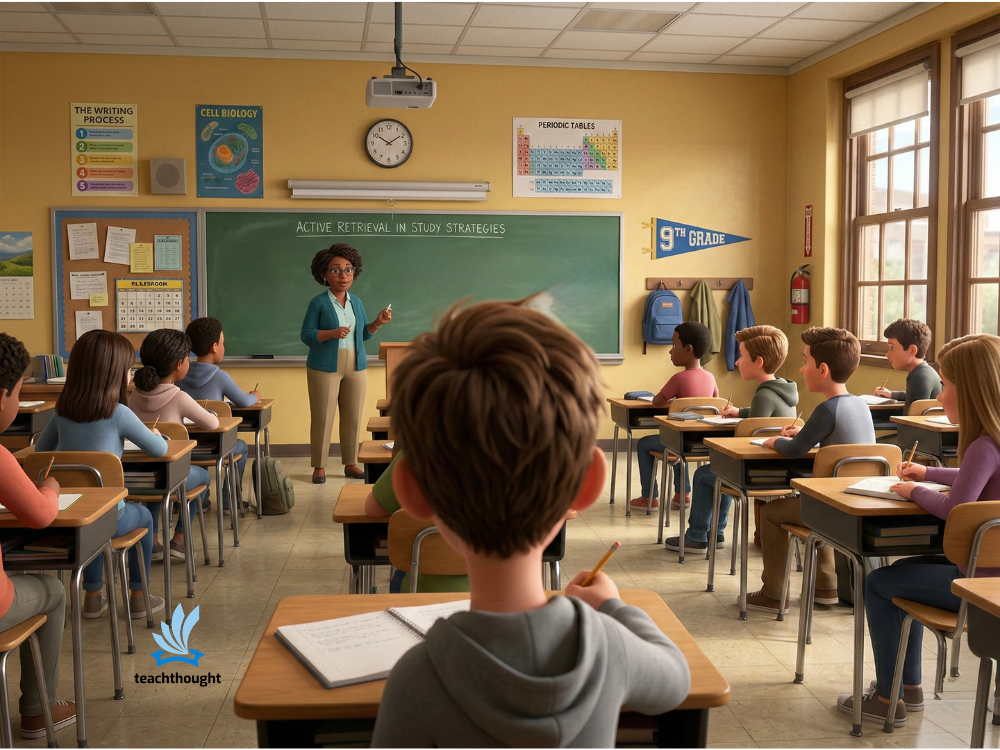
In research work examining exam-readiness behaviors—including analysis conducted by the team at PrepPool studying assessment performance trends—one pattern appears...   Sumber: Baca selengkapnya

Ringkas artikel ini ke dalam bahasa Indonesia yang jelas dan formal maksimal 120-150 kata:

contributed by Iryna Liusik, Early Childhood Educator — Linguistics & Emotional Development

Series note: This is Part 1 of a two-part series: Part 2 offers a one-minute classroom observation routine that helps teachers notice comfort that makes early expression visible before assumptions become records.

Introduction: In early childhood classrooms, the fastest mistake we make is treating silence as a single ‘thing.’ This piece offers a clearer interpretive lens for ‘quiet’ in multilingual learners — not to delay support, but to choose the right kind. 

A Quiet Moment That Isn’t ‘Nothing’ 

During art time, a four-year-old holds a paintbrush but doesn’t paint.

She watches a peer mix colors, her hands tense around the brush. After a minute, her shoulders soften, her eyes follow the brush strokes on paper. She leans in just an inch and whispers a single word to the child beside her. 

To many adults, this looks like ‘nothing happened.’ She’s still a ‘quiet child,’ but to an educator attuned to dual language learners (DLLs) and their development, that whisper and that shift in her body are something else entirely: the earliest visible steps of expression in a new language and a new environment. 

Moments like these are easy to miss in busy classrooms where verbal participation is often treated as the primary indicator of learning. Yet for many multilingual children, expression begins long before full sentences appear. 

It begins in posture, in breath, in proximity and gesture. And sometimes, in a single whispered word. The difference between ‘nothing happened’ and ‘something is starting’ is rarely a child problem; it is usually an adult perception problem. In busy classrooms, perception becomes practice — and practice becomes trajectory. 

Why This Matters Now in U.S. Classrooms 

In the United States, nearly one in three children under age five is growing up with more than one language, and…