Advertisement
Tulis ulang artikel berikut ke dalam bahasa Indonesia yang rapi, mudah dipahami, gaya formal pendidikan, minimal 300 kata: 
	
contributed by Tulika Samal


In today’s rapidly changing world, the ability to think critically is more valuable than ever.

Mathematics, often perceived as a subject of numbers and formulas, is in fact one of the most powerful tools for developing critical thinking. At the heart of meaningful mathematics lies the ability to analyze, interpret, and justify reasoning.

Why Mathematical Reasoning Matters More Than Memorization

For many learners, mathematics becomes a set of procedures to memorize; apply a formula, follow steps, and arrive at an answer. While this approach may produce correct results in familiar situations, it often falls short when students encounter new or complex problems. True mathematical reasoning begins when students ask:


  Why does this work?
  What does this result mean?
  Can this be solved in another way?


Developing reasoning shifts the focus from simply getting the answer to understanding the process. For example, instead of just calculating a discount, a student explains why 20% off followed by 10% is not the same as 30% off.

Mathematical reasoning helps in real life decision-making such as budgeting, comparing offers, and interpreting data. It helps to build problem solving confidence and independence. Mathematical reasoning also supports careers in fields like STEM and finance.

What Mathematical Reasoning Involves

Mathematical reasoning is not just getting an answer. It involves analyzing a problem, interpreting what the result means, and justifying why the thinking is sound.


      What Mathematical Reasoning Involves
      
        Mathematical reasoning is not just getting an answer. It involves analyzing a problem, interpreting what the result means, and justifying why the thinking is sound.


            Reasoning Skill
            What Students Do
            Example
            Why It Matters


          ...   Sumber: Baca selengkapnya

Tulis ulang artikel berikut ke dalam bahasa Indonesia yang rapi, mudah dipahami, gaya formal pendidikan, minimal 300 kata:

contributed by Tulika Samal

In today’s rapidly changing world, the ability to think critically is more valuable than ever.

Mathematics, often perceived as a subject of numbers and formulas, is in fact one of the most powerful tools for developing critical thinking. At the heart of meaningful mathematics lies the ability to analyze, interpret, and justify reasoning.

Why Mathematical Reasoning Matters More Than Memorization

For many learners, mathematics becomes a set of procedures to memorize; apply a formula, follow steps, and arrive at an answer. While this approach may produce correct results in familiar situations, it often falls short when students encounter new or complex problems. True mathematical reasoning begins when students ask:

  • Why does this work?
  • What does this result mean?
  • Can this be solved in another way?

Developing reasoning shifts the focus from simply getting the answer to understanding the process. For example, instead of just calculating a discount, a student explains why 20% off followed by 10% is not the same as 30% off.

Mathematical reasoning helps in real life decision-making such as budgeting, comparing offers, and interpreting data. It helps to build problem solving confidence and independence. Mathematical reasoning also supports careers in fields like STEM and finance.

What Mathematical Reasoning Involves

Mathematical reasoning is not just getting an answer. It involves analyzing a problem, interpreting what the result means, and justifying why the thinking is sound.

What Mathematical Reasoning Involves

Mathematical reasoning is not just getting an answer. It involves analyzing a problem, interpreting what the result means, and justifying why the thinking is sound.

Reasoning Skill What Students Do Example Why It Matters


Sumber:
Baca selengkapnya

Ringkas artikel ini ke dalam bahasa Indonesia yang jelas dan formal maksimal 120-150 kata: contributed by Tulika Samal In today’s…

Read More

Tulis ulang artikel berikut ke dalam bahasa Indonesia yang rapi, mudah dipahami, gaya formal pendidikan, minimal 300 kata: 
	
Teaching Students to Navigate Common Digital File Challenges


In today’s learning area, working with digital files is an integral part of the educational process. Students create, save, share, and edit various documents every day. 


They can range from simple text files to complex multimedia projects. Meanwhile, with technological progress, many students face challenges that hinder effective learning. That’s why the skill to navigate the digital space is no longer just an extra one.  It must now be a core competency. 


Teaching students to overcome these challenges means not only improving their academic performance. It is also about preparing them for the real world. A place where digital literacy is critically important.


See also 15 Ways To Share Digital Files


Digital File Challenges in Education. 


The first step toward solving the problem is to recognize its scope. Digital file challenges arise due to:


A lack of systematic organization;


Insufficient understanding of file formats;


Incorrect approaches to data storage.


Students often get lost among a large number of documents or cannot find the files they need. They also frequently submit work in the wrong format. In such a context, there is a need to teach not only technical skills. Here appears the need for the logic behind working with files. If a student understands why certain formats are suitable for specific tasks, they can avoid many problems. 


Here it’s a good idea to look into tools that simplify working with file formats. A practical example is when students use images in HEIC format. These may not open on many devices or platforms. In such cases, tools acting as HEIC to PNG converter come in handy. This can allow you to quickly change the file format without losing quality. They also ensure compatibility with most systems. In this way, you can avoid technical issues when submitting assignments. Also, you’ll make the learning process smoother.


Student...   Sumber: Baca selengkapnya

Tulis ulang artikel berikut ke dalam bahasa Indonesia yang rapi, mudah dipahami, gaya formal pendidikan, minimal 300 kata:

Teaching Students to Navigate Common Digital File Challenges

In today’s learning area, working with digital files is an integral part of the educational process. Students create, save, share, and edit various documents every day.

They can range from simple text files to complex multimedia projects. Meanwhile, with technological progress, many students face challenges that hinder effective learning. That’s why the skill to navigate the digital space is no longer just an extra one.  It must now be a core competency.

Teaching students to overcome these challenges means not only improving their academic performance. It is also about preparing them for the real world. A place where digital literacy is critically important.

See also 15 Ways To Share Digital Files

Digital File Challenges in Education. 

The first step toward solving the problem is to recognize its scope. Digital file challenges arise due to:

  • A lack of systematic organization;
  • Insufficient understanding of file formats;
  • Incorrect approaches to data storage.

Students often get lost among a large number of documents or cannot find the files they need. They also frequently submit work in the wrong format. In such a context, there is a need to teach not only technical skills. Here appears the need for the logic behind working with files. If a student understands why certain formats are suitable for specific tasks, they can avoid many problems.

Here it’s a good idea to look into tools that simplify working with file formats. A practical example is when students use images in HEIC format. These may not open on many devices or platforms. In such cases, tools acting as HEIC to PNG converter come in handy. This can allow you to quickly change the file format without losing quality. They also ensure compatibility with most systems. In this way, you can avoid technical issues when submitting assignments. Also, you’ll make the learning process smoother.

Student…


Sumber: Baca selengkapnya

Ringkas artikel ini ke dalam bahasa Indonesia yang jelas dan formal maksimal 120-150 kata: Teaching Students to Navigate Common Digital…

Read More
Tulis ulang artikel berikut ke dalam bahasa Indonesia yang rapi, mudah dipahami, gaya formal pendidikan, minimal 300 kata: 
	
contributed by Mike Brown, education researcher at preppool.


Every educator has seen it.


A thoughtful, engaged student studies diligently, participates in class discussions, completes assignments on time—and then underperforms on the first major assessment.


The disappointment is visible. Sometimes the teacher feels it just as strongly as the student.


The instinctive explanations are familiar: anxiety, distraction, poor time management, lack of effort. But if this pattern repeats across classrooms and grade levels, it may point to something more structural.


What if first-time underperformance is less about student shortcomings and more about how we design learning?


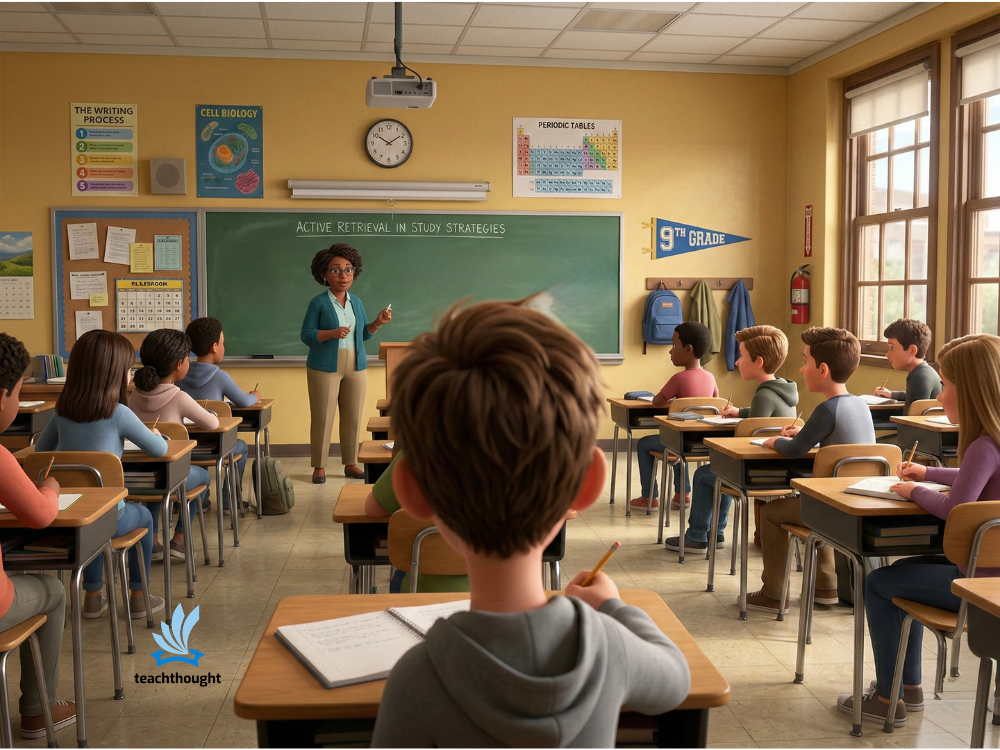
If we look closely, many learning environments unintentionally reward familiarity over retrieval, coverage over coherence, and comfort over cognitive strain. Students leave review sessions feeling confident—only to discover that confidence was built on recognition, not recall.


That distinction matters more than we often admit.


The Gap Between Knowing and Being Able to Retrieve


In most classrooms, preparation looks something like this:


Students reread notes.


They highlight key passages.


They review slides.


They skim summaries.


These activities feel productive. There is visible effort. There is time invested. There is even a sense of clarity while reviewing.


But recognition is not retrieval.


When information is in front of us, it feels accessible. When it isn’t, the experience changes. Exams and performance tasks require students to produce knowledge independently—sometimes under time constraints, sometimes in unfamiliar formats.


The problem is not that students don’t “know” the material. The problem is that they have not practiced retrieving it often enough.


In research work examining exam-readiness behaviors—including analysis conducted by the team at PrepPool studying assessment performance trends—one pattern appears...   Sumber: Baca selengkapnya

Tulis ulang artikel berikut ke dalam bahasa Indonesia yang rapi, mudah dipahami, gaya formal pendidikan, minimal 300 kata:

contributed by Mike Brown, education researcher at preppool.

Every educator has seen it.

A thoughtful, engaged student studies diligently, participates in class discussions, completes assignments on time—and then underperforms on the first major assessment.

The disappointment is visible. Sometimes the teacher feels it just as strongly as the student.

The instinctive explanations are familiar: anxiety, distraction, poor time management, lack of effort. But if this pattern repeats across classrooms and grade levels, it may point to something more structural.

What if first-time underperformance is less about student shortcomings and more about how we design learning?

If we look closely, many learning environments unintentionally reward familiarity over retrieval, coverage over coherence, and comfort over cognitive strain. Students leave review sessions feeling confident—only to discover that confidence was built on recognition, not recall.

That distinction matters more than we often admit.

The Gap Between Knowing and Being Able to Retrieve

In most classrooms, preparation looks something like this:

Students reread notes.

They highlight key passages.

They review slides.

They skim summaries.

These activities feel productive. There is visible effort. There is time invested. There is even a sense of clarity while reviewing.

But recognition is not retrieval.

When information is in front of us, it feels accessible. When it isn’t, the experience changes. Exams and performance tasks require students to produce knowledge independently—sometimes under time constraints, sometimes in unfamiliar formats.

The problem is not that students don’t “know” the material. The problem is that they have not practiced retrieving it often enough.

In research work examining exam-readiness behaviors—including analysis conducted by the team at PrepPool studying assessment performance trends—one pattern appears…


Sumber: Baca selengkapnya

Ringkas artikel ini ke dalam bahasa Indonesia yang jelas dan formal maksimal 120-150 kata: contributed by Mike Brown, education researcher…

Read More