Advertisement

Tulis ulang artikel berikut ke dalam bahasa Indonesia yang rapi, mudah dipahami, gaya formal pendidikan, minimal 300 kata:

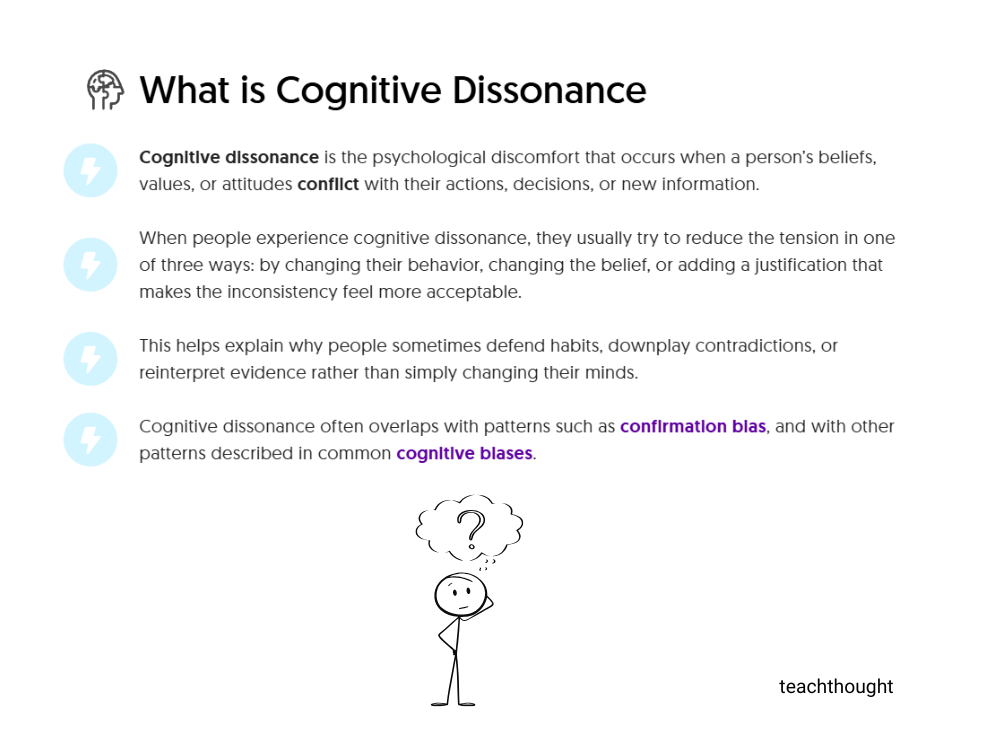
Cognitive dissonance is the psychological discomfort people feel when their beliefs, values, or self-image conflict with their actions, decisions, or new information.

Definition

Cognitive dissonance is a theory in psychology describing the tension that arises when a person holds inconsistent beliefs, or when behavior conflicts with stated values. That discomfort often motivates the person to reduce the inconsistency by changing behavior, revising beliefs, or adding a justification.

Key Characteristics of Cognitive Dissonance

  • It involves felt psychological discomfort, not just a contradiction on paper.
  • It usually appears when an action, belief, value, or identity claim does not align with another important cognition.
  • The discomfort tends to be stronger when the issue matters to the person or affects how they see themselves.
  • People are often motivated to reduce the tension quickly, but not always rationally.
  • Resolution may involve honest change, but it may also involve defensiveness, distortion, or rationalization.

How Cognitive Dissonance Typically Unfolds

1. A conflict appears

A belief, value, or self-image clashes with a behavior, decision, or new information.

Example: A student believes honesty matters but cheats on an assignment.

2. Discomfort is felt

The inconsistency creates internal tension such as unease, guilt, defensiveness, or pressure to explain the mismatch.

Example: The student sees the behavior as inconsistent with being an honest person.

3. A response follows

The person tries to reduce the discomfort by changing the behavior, changing the belief, or adding a justification.

Example: The student stops cheating, redefines the act as “not really cheating,” or claims the assignment was unfair.

Three Common Ways People Reduce Cognitive Dissonance

1. Change behavior

The person…



Sumber: Baca selengkapnya

Tulis ulang artikel berikut ke dalam bahasa Indonesia yang rapi, mudah dipahami, gaya formal pendidikan, minimal 300 kata: 


    Cognitive dissonance is the psychological discomfort people feel when their beliefs, values, or self-image conflict with their actions, decisions, or new information.


    Definition
    Cognitive dissonance is a theory in psychology describing the tension that arises when a person holds inconsistent beliefs, or when behavior conflicts with stated values. That discomfort often motivates the person to reduce the inconsistency by changing behavior, revising beliefs, or adding a justification.


    Key Characteristics of Cognitive Dissonance
    
      It involves felt psychological discomfort, not just a contradiction on paper.
      It usually appears when an action, belief, value, or identity claim does not align with another important cognition.
      The discomfort tends to be stronger when the issue matters to the person or affects how they see themselves.
      People are often motivated to reduce the tension quickly, but not always rationally.
      Resolution may involve honest change, but it may also involve defensiveness, distortion, or rationalization.


  How Cognitive Dissonance Typically Unfolds

  
    1. A conflict appears
    A belief, value, or self-image clashes with a behavior, decision, or new information.
    Example: A student believes honesty matters but cheats on an assignment.


    2. Discomfort is felt
    The inconsistency creates internal tension such as unease, guilt, defensiveness, or pressure to explain the mismatch.
    Example: The student sees the behavior as inconsistent with being an honest person.


    3. A response follows
    The person tries to reduce the discomfort by changing the behavior, changing the belief, or adding a justification.
    Example: The student stops cheating, redefines the act as “not really cheating,” or claims the assignment was unfair.


    Three Common Ways People Reduce Cognitive Dissonance

    
      1. Change behavior
      The person...   Sumber: Baca selengkapnya

Ringkas artikel ini ke dalam bahasa Indonesia yang jelas dan formal maksimal 120-150 kata:

Cognitive dissonance is the psychological discomfort people feel when their beliefs, values, or self-image conflict with their actions, decisions, or new information.

Definition

Cognitive dissonance is a theory in psychology describing the tension that arises when a person holds inconsistent beliefs, or when behavior conflicts with stated values. That discomfort often motivates the person to reduce the inconsistency by changing behavior, revising beliefs, or adding a justification.

Key Characteristics of Cognitive Dissonance

  • It involves felt psychological discomfort, not just a contradiction on paper.
  • It usually appears when an action, belief, value, or identity claim does not align with another important cognition.
  • The discomfort tends to be stronger when the issue matters to the person or affects how they see themselves.
  • People are often motivated to reduce the tension quickly, but not always rationally.
  • Resolution may involve honest change, but it may also involve defensiveness, distortion, or rationalization.

How Cognitive Dissonance Typically Unfolds

1. A conflict appears

A belief, value, or self-image clashes with a behavior, decision, or new information.

Example: A student believes honesty matters but cheats on an assignment.

2. Discomfort is felt

The inconsistency creates internal tension such as unease, guilt, defensiveness, or pressure to explain the mismatch.

Example: The student sees the behavior as inconsistent with being an honest person.

3. A response follows

The person tries to reduce the discomfort by changing the behavior, changing the belief, or adding a justification.

Example: The student stops cheating, redefines the act as “not really cheating,” or claims the assignment was unfair.

Three Common Ways People Reduce Cognitive Dissonance

1. Change behavior

The person…