Advertisement
Tulis ulang artikel berikut ke dalam bahasa Indonesia yang rapi, mudah dipahami, gaya formal pendidikan, minimal 300 kata: 


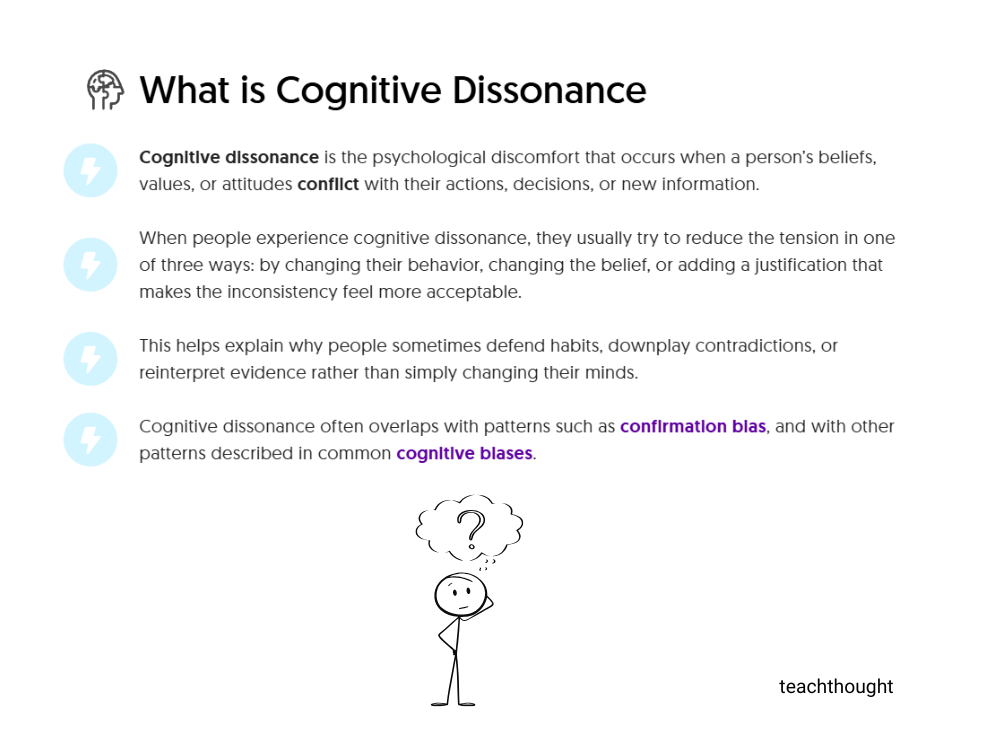
    Cognitive dissonance is the psychological discomfort people feel when their beliefs, values, or self-image conflict with their actions, decisions, or new information.


    Definition
    Cognitive dissonance is a theory in psychology describing the tension that arises when a person holds inconsistent beliefs, or when behavior conflicts with stated values. That discomfort often motivates the person to reduce the inconsistency by changing behavior, revising beliefs, or adding a justification.


    Key Characteristics of Cognitive Dissonance
    
      It involves felt psychological discomfort, not just a contradiction on paper.
      It usually appears when an action, belief, value, or identity claim does not align with another important cognition.
      The discomfort tends to be stronger when the issue matters to the person or affects how they see themselves.
      People are often motivated to reduce the tension quickly, but not always rationally.
      Resolution may involve honest change, but it may also involve defensiveness, distortion, or rationalization.


  How Cognitive Dissonance Typically Unfolds

  
    1. A conflict appears
    A belief, value, or self-image clashes with a behavior, decision, or new information.
    Example: A student believes honesty matters but cheats on an assignment.


    2. Discomfort is felt
    The inconsistency creates internal tension such as unease, guilt, defensiveness, or pressure to explain the mismatch.
    Example: The student sees the behavior as inconsistent with being an honest person.


    3. A response follows
    The person tries to reduce the discomfort by changing the behavior, changing the belief, or adding a justification.
    Example: The student stops cheating, redefines the act as “not really cheating,” or claims the assignment was unfair.


    Three Common Ways People Reduce Cognitive Dissonance

    
      1. Change behavior
      The person...   Sumber: Baca selengkapnya

Tulis ulang artikel berikut ke dalam bahasa Indonesia yang rapi, mudah dipahami, gaya formal pendidikan, minimal 300 kata:

Cognitive dissonance is the psychological discomfort people feel when their beliefs, values, or self-image conflict with their actions, decisions, or new information.

Definition

Cognitive dissonance is a theory in psychology describing the tension that arises when a person holds inconsistent beliefs, or when behavior conflicts with stated values. That discomfort often motivates the person to reduce the inconsistency by changing behavior, revising beliefs, or adding a justification.

Key Characteristics of Cognitive Dissonance

  • It involves felt psychological discomfort, not just a contradiction on paper.
  • It usually appears when an action, belief, value, or identity claim does not align with another important cognition.
  • The discomfort tends to be stronger when the issue matters to the person or affects how they see themselves.
  • People are often motivated to reduce the tension quickly, but not always rationally.
  • Resolution may involve honest change, but it may also involve defensiveness, distortion, or rationalization.

How Cognitive Dissonance Typically Unfolds

1. A conflict appears

A belief, value, or self-image clashes with a behavior, decision, or new information.

Example: A student believes honesty matters but cheats on an assignment.

2. Discomfort is felt

The inconsistency creates internal tension such as unease, guilt, defensiveness, or pressure to explain the mismatch.

Example: The student sees the behavior as inconsistent with being an honest person.

3. A response follows

The person tries to reduce the discomfort by changing the behavior, changing the belief, or adding a justification.

Example: The student stops cheating, redefines the act as “not really cheating,” or claims the assignment was unfair.

Three Common Ways People Reduce Cognitive Dissonance

1. Change behavior

The person…


Sumber:
Baca selengkapnya

Ringkas artikel ini ke dalam bahasa Indonesia yang jelas dan formal maksimal 120-150 kata: Cognitive dissonance is the psychological discomfort…

Read More
Tulis ulang artikel berikut ke dalam bahasa Indonesia yang rapi, mudah dipahami, gaya formal pendidikan, minimal 300 kata: 
	
When Accommodations Exist but Access Doesn’t: A Middle School Reality Check 


contributed by Pramod Polimari, middle school special education strategist


In middle school classrooms across the country, accommodations are in place. 


IEPs are written. 


Support plans are documented. 


Students are technically “included.” 


And yet, many students still struggle to access learning in meaningful ways. 


This disconnect—where accommodations exist on paper but access breaks down in practice—is one of the most common and least discussed challenges in middle school education. It’s rarely the result of negligence or lack of care. More often, it emerges from well-intentioned assumptions about independence, readiness, and what middle school students “should” be able to manage on their own. 


The Middle School Shift That Changes Everything 


Middle school marks a sharp transition. Expectations increase rapidly, not just academically but behaviorally and cognitively. Students are expected to manage multiple teachers, track assignments independently, navigate complex schedules, and keep pace with faster instruction. 


For students with learning disabilities, ADHD, or executive functioning challenges, this shift can quietly dismantle access—even when accommodations are technically available. 


The challenge isn’t that accommodations disappear. It’s that the environment changes around them. 


What worked in elementary school often assumes a level of adult scaffolding that middle school systems quietly remove. The result is a growing gap between what students are entitled to receive and what they can realistically use during instruction. 


When Independence Becomes an Assumption, Not a Skill 


One of the most common middle school assumptions is that students should now “self-advocate” and “manage their accommodations.” 


In theory, this sounds reasonable. Independence is an important long-term goal....   Sumber: Baca selengkapnya

Tulis ulang artikel berikut ke dalam bahasa Indonesia yang rapi, mudah dipahami, gaya formal pendidikan, minimal 300 kata:

When Accommodations Exist but Access Doesn’t: A Middle School Reality Check 

contributed by Pramod Polimari, middle school special education strategist

In middle school classrooms across the country, accommodations are in place. 

IEPs are written. 

Support plans are documented. 

Students are technically “included.” 

And yet, many students still struggle to access learning in meaningful ways. 

This disconnect—where accommodations exist on paper but access breaks down in practice—is one of the most common and least discussed challenges in middle school education. It’s rarely the result of negligence or lack of care. More often, it emerges from well-intentioned assumptions about independence, readiness, and what middle school students “should” be able to manage on their own. 

The Middle School Shift That Changes Everything 

Middle school marks a sharp transition. Expectations increase rapidly, not just academically but behaviorally and cognitively. Students are expected to manage multiple teachers, track assignments independently, navigate complex schedules, and keep pace with faster instruction. 

For students with learning disabilities, ADHD, or executive functioning challenges, this shift can quietly dismantle access—even when accommodations are technically available. 

The challenge isn’t that accommodations disappear. It’s that the environment changes around them. 

What worked in elementary school often assumes a level of adult scaffolding that middle school systems quietly remove. The result is a growing gap between what students are entitled to receive and what they can realistically use during instruction. 

When Independence Becomes an Assumption, Not a Skill 

One of the most common middle school assumptions is that students should now “self-advocate” and “manage their accommodations.” 

In theory, this sounds reasonable. Independence is an important long-term goal….


Sumber:
Baca selengkapnya

Ringkas artikel ini ke dalam bahasa Indonesia yang jelas dan formal maksimal 120-150 kata: When Accommodations Exist but Access Doesn’t:…

Read More
Tulis ulang artikel berikut ke dalam bahasa Indonesia yang rapi, mudah dipahami, gaya formal pendidikan, minimal 300 kata: 


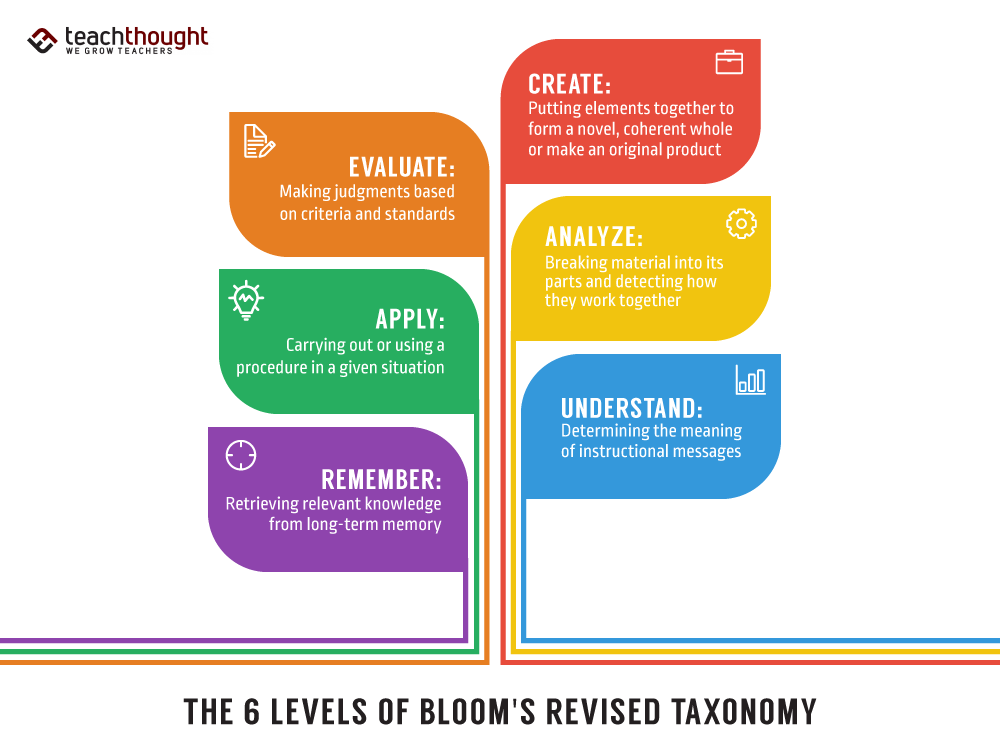
  Bloom’s Revised Taxonomy: cognitive process dimension


Bloom’s Revised Taxonomy changed the original 1956 framework by updating the level names to verbs, reordering the top levels, and adding a second dimension for types of knowledge. The revision clarifies what students do cognitively and how those actions interact with factual, conceptual, procedural, and metacognitive knowledge.


  How Bloom’s Taxonomy Changed
  
    Nouns to verbs: levels reframed as cognitive actions: Remember, Understand, Apply, Analyze, Evaluate, Create.
    Top-level reorder: Create placed above Evaluate to reflect generative thinking.
    Two dimensions: pair the Cognitive Process with the Knowledge Dimension (Factual, Conceptual, Procedural, Metacognitive).
    Clearer alignment: objectives, instruction, and assessment mapped with the Taxonomy Table.
    Modernized language: Comprehension becomes Understand; Knowledge becomes Remember.
    Planning impact: encourages task verbs and evidence of learning rather than category labels.


  Original vs Revised Level Names


        Original (1956)
        Revised (2001)


      KnowledgeRemember
      ComprehensionUnderstand
      ApplicationApply
      AnalysisAnalyze
      SynthesisCreate
      EvaluationEvaluate


  What Changed Beyond the Words
  
    The revision introduced the Taxonomy Table: a grid that crosses six cognitive processes with four knowledge types. This helps teachers specify outcomes and assessments more precisely, for example, Analyze x using conceptual knowledge or Apply y using procedural knowledge.
  
  
    Knowledge Dimension: Factual, Conceptual, Procedural, Metacognitive.
    Process–knowledge pairing: clarifies task design and evidence quality.
    Assessment implications: verb choice signals expected thinking and scoring focus.


  Why It Was Revised
  
    From 1995 to 2000, a team led by Lorin Anderson and David Krathwohl updated Bloom’s...   Sumber: Baca selengkapnya

Tulis ulang artikel berikut ke dalam bahasa Indonesia yang rapi, mudah dipahami, gaya formal pendidikan, minimal 300 kata:
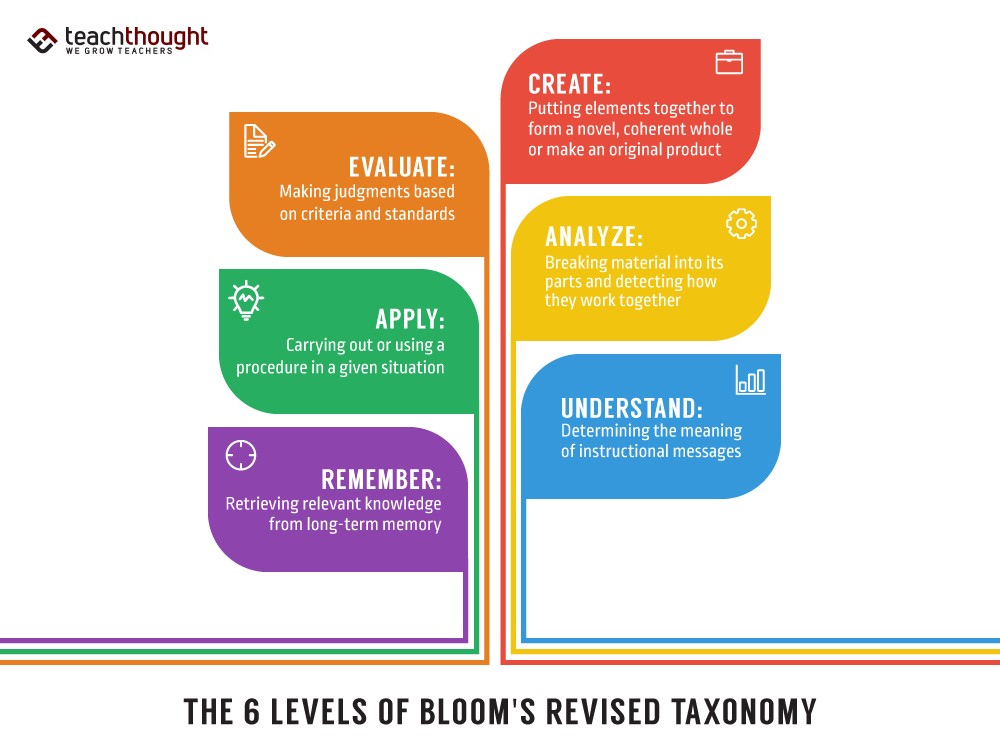
Bloom's Revised Taxonomy chart: Remember, Understand, Apply, Analyze, Evaluate, Create
Bloom’s Revised Taxonomy: cognitive process dimension

Bloom’s Revised Taxonomy changed the original 1956 framework by updating the level names to verbs, reordering the top levels, and adding a second dimension for types of knowledge. The revision clarifies what students do cognitively and how those actions interact with factual, conceptual, procedural, and metacognitive knowledge.

How Bloom’s Taxonomy Changed

  • Nouns to verbs: levels reframed as cognitive actions: Remember, Understand, Apply, Analyze, Evaluate, Create.
  • Top-level reorder: Create placed above Evaluate to reflect generative thinking.
  • Two dimensions: pair the Cognitive Process with the Knowledge Dimension (Factual, Conceptual, Procedural, Metacognitive).
  • Clearer alignment: objectives, instruction, and assessment mapped with the Taxonomy Table.
  • Modernized language: Comprehension becomes Understand; Knowledge becomes Remember.
  • Planning impact: encourages task verbs and evidence of learning rather than category labels.

Original vs Revised Level Names

Original (1956) Revised (2001)
KnowledgeRemember
ComprehensionUnderstand
ApplicationApply
AnalysisAnalyze
SynthesisCreate
EvaluationEvaluate

What Changed Beyond the Words

The revision introduced the Taxonomy Table: a grid that crosses six cognitive processes with four knowledge types. This helps teachers specify outcomes and assessments more precisely, for example, Analyze x using conceptual knowledge or Apply y using procedural knowledge.

  • Knowledge Dimension: Factual, Conceptual, Procedural, Metacognitive.
  • Process–knowledge pairing: clarifies task design and evidence quality.
  • Assessment implications: verb choice signals expected thinking and scoring focus.

Why It Was Revised

From 1995 to 2000, a team led by Lorin Anderson and David Krathwohl updated Bloom’s…


Sumber:
Baca selengkapnya

Ringkas artikel ini ke dalam bahasa Indonesia yang jelas dan formal maksimal 120-150 kata: Bloom’s Revised Taxonomy: cognitive process dimension…

Read More
Tulis ulang artikel berikut ke dalam bahasa Indonesia yang rapi, mudah dipahami, gaya formal pendidikan, minimal 300 kata: 


contributed by Meg Price, the ei experience


Social-emotional learning (SEL) by definition is a process for learning life skills, including how to deal with oneself, others, and relationships, and work in an effective manner.


Although there are many great SEL programs, SEL can also be incorporated into each lesson as a way of teaching students to understand how to action the skills in a variety of situations and form positive habits. All students start school with some level of social and emotional skills, and all will develop their social and emotional skills at different rates.


Parents and teachers are both responsible for teaching students life skills, and certainly, much of what they learn will be by watching our actions. The five strategies below are will not only benefit students’ social-emotional learning, but can also be beneficial to teachers’ well-being, too.


See also The Benefits Of Social-Emotional Learning


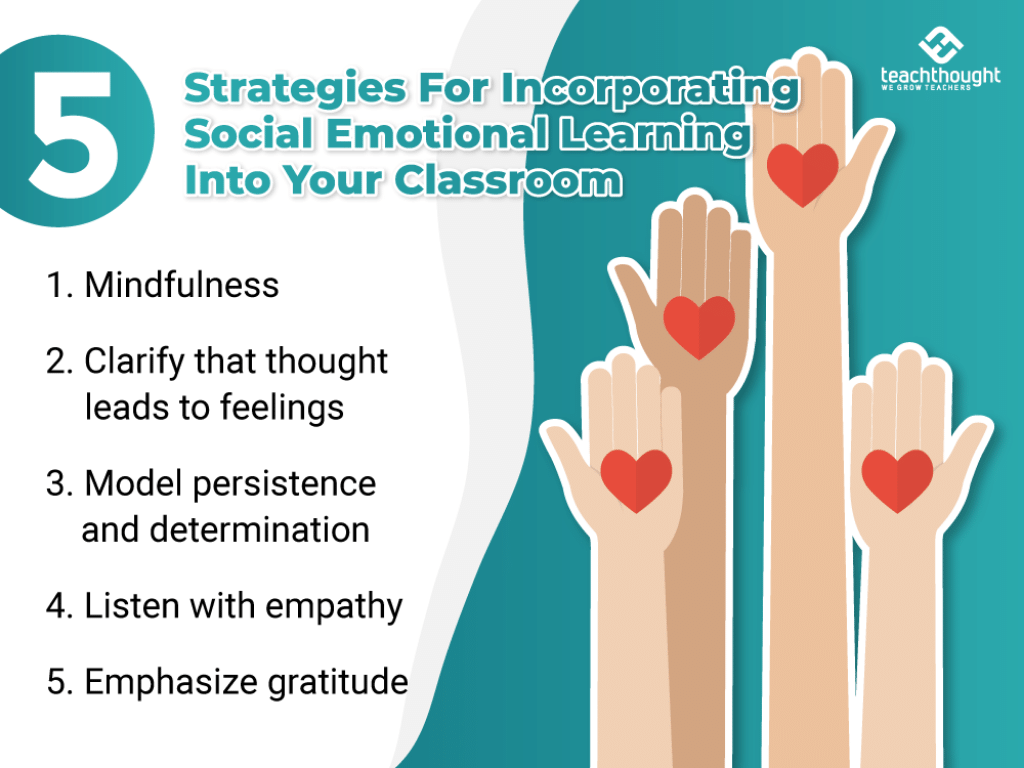
5 Strategies For Incorporating Social-Emotional Learning Into Your Classroom 


1. Through mindfulness


Mindfulness is: paying attention, in a particular way, on purpose, in the present moment, non-judgmentally.


We are hearing more and more about the benefits of mindfulness for children. Increased attention leads to better performance academically and increased emotional and social intelligence. Children are better able to learn, nurture themselves, and be aware of their own emotional needs.


Mindfulness practices help students focus on their breath, body, thoughts, feelings, and the world around them. When they can observe their thoughts and feelings, they have the freedom to choose how they will speak and act–which can lead to a happier, more harmonious classroom.


There are many mindfulness activities available for free–on YouTube, for example. Further, there are mindfulness and meditation apps that can provide frameworks for getting started. Why not start each lesson with a different mindfulness...   Sumber: Baca selengkapnya

Tulis ulang artikel berikut ke dalam bahasa Indonesia yang rapi, mudah dipahami, gaya formal pendidikan, minimal 300 kata:

contributed by Meg Price, the ei experience

Social-emotional learning (SEL) by definition is a process for learning life skills, including how to deal with oneself, others, and relationships, and work in an effective manner.

Although there are many great SEL programs, SEL can also be incorporated into each lesson as a way of teaching students to understand how to action the skills in a variety of situations and form positive habits. All students start school with some level of social and emotional skills, and all will develop their social and emotional skills at different rates.

Parents and teachers are both responsible for teaching students life skills, and certainly, much of what they learn will be by watching our actions. The five strategies below are will not only benefit students’ social-emotional learning, but can also be beneficial to teachers’ well-being, too.

See also The Benefits Of Social-Emotional Learning

5 Strategies For Incorporating Social-Emotional Learning Into Your Classroom

1. Through mindfulness

Mindfulness is: paying attention, in a particular way, on purpose, in the present moment, non-judgmentally.

We are hearing more and more about the benefits of mindfulness for children. Increased attention leads to better performance academically and increased emotional and social intelligence. Children are better able to learn, nurture themselves, and be aware of their own emotional needs.

Mindfulness practices help students focus on their breath, body, thoughts, feelings, and the world around them. When they can observe their thoughts and feelings, they have the freedom to choose how they will speak and act–which can lead to a happier, more harmonious classroom.

There are many mindfulness activities available for free–on YouTube, for example. Further, there are mindfulness and meditation apps that can provide frameworks for getting started. Why not start each lesson with a different mindfulness…


Sumber: Baca selengkapnya

Ringkas artikel ini ke dalam bahasa Indonesia yang jelas dan formal maksimal 120-150 kata: contributed by Meg Price, the ei…

Read More
Tulis ulang artikel berikut ke dalam bahasa Indonesia yang rapi, mudah dipahami, gaya formal pendidikan, minimal 300 kata: 


by Terry Heick


There are ideas and then there are ideas between ideas.


The spaces between ideas can be pregnant with ideas of their own in the same way that there are stars and then there are spaces between the stars. And these spaces matter because they’re dark and dark (and its absence) characterizes light.


Okay, how about this: Every reality has factors. Every effect has a cause. Every data point has a context. You can separate these relationships in a temporary kind of singularity in order to examine them, but in doing so risk losing the thing itself because the thing doesn’t just have a context but only exists in a context.


We may fail to recognize these factors and causes and contexts, but they’re there. We may fail to extract the right lessons from these factors and realities and causes and effects and contexts and data, but they’re there, ready to be extracted.


And it’s not just about contexts and relationships. There are distinctions here too—nuanced distinctions that are not minor. The difference, for example, between causation and correlation. The difference between cause and effect but also the reality that it’s all relative (context) and recursive and non-linear. One thing ends and another begins and one causes the other and defines the other and depends on the other but are also entirely separate.


Which brings us to underlying assumptions.


That there are underlying assumptions that we ‘bring’ to a thought or decision may be more interesting than examining one set of underlying assumptions themselves, but we’re here for innovation in education, not epistemology.


Note: These aren’t in any sort of order because sometimes one needs another for context so I couldn’t, for example, leave #2 for last (as the most important) because it helped flesh out the rest and I thought #1 should be first even though it may not be the most important.


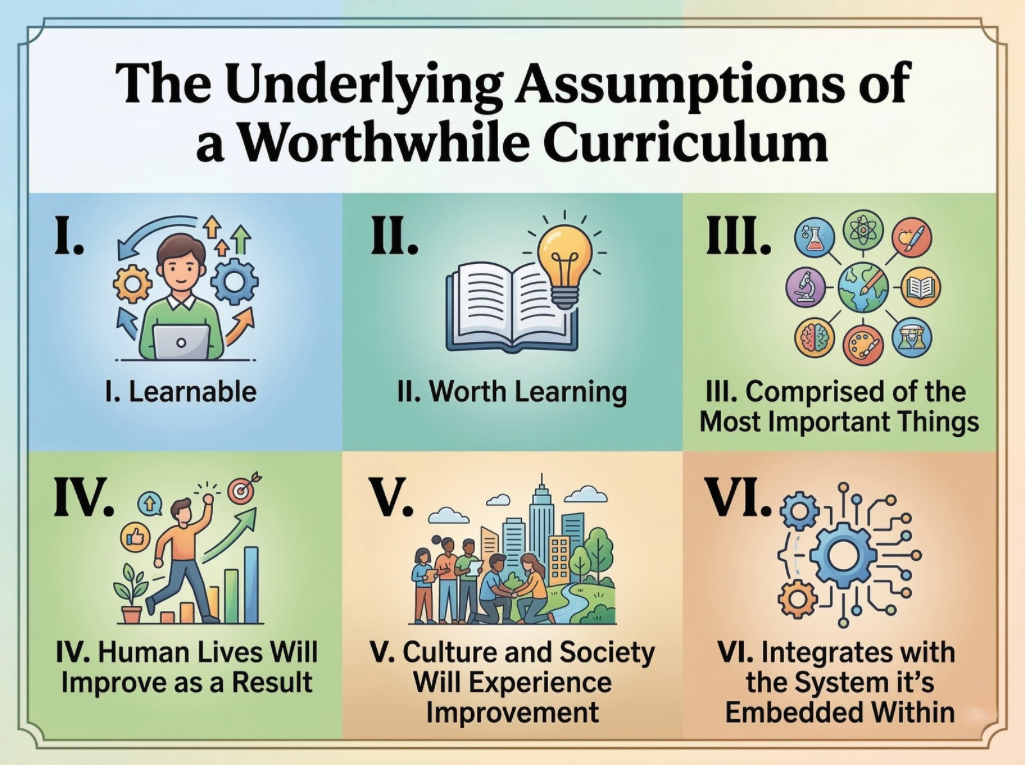
The Assumptions And Characteristics Of A Curriculum


I....   Sumber: Baca selengkapnya

Tulis ulang artikel berikut ke dalam bahasa Indonesia yang rapi, mudah dipahami, gaya formal pendidikan, minimal 300 kata:

by Terry Heick

There are ideas and then there are ideas between ideas.

The spaces between ideas can be pregnant with ideas of their own in the same way that there are stars and then there are spaces between the stars. And these spaces matter because they’re dark and dark (and its absence) characterizes light.

Okay, how about this: Every reality has factors. Every effect has a cause. Every data point has a context. You can separate these relationships in a temporary kind of singularity in order to examine them, but in doing so risk losing the thing itself because the thing doesn’t just have a context but only exists in a context.

We may fail to recognize these factors and causes and contexts, but they’re there. We may fail to extract the right lessons from these factors and realities and causes and effects and contexts and data, but they’re there, ready to be extracted.

And it’s not just about contexts and relationships. There are distinctions here too—nuanced distinctions that are not minor. The difference, for example, between causation and correlation. The difference between cause and effect but also the reality that it’s all relative (context) and recursive and non-linear. One thing ends and another begins and one causes the other and defines the other and depends on the other but are also entirely separate.

Which brings us to underlying assumptions.

That there are underlying assumptions that we ‘bring’ to a thought or decision may be more interesting than examining one set of underlying assumptions themselves, but we’re here for innovation in education, not epistemology.

Note: These aren’t in any sort of order because sometimes one needs another for context so I couldn’t, for example, leave #2 for last (as the most important) because it helped flesh out the rest and I thought #1 should be first even though it may not be the most important.

The Assumptions And Characteristics Of A Curriculum

I….


Sumber:
Baca selengkapnya

Ringkas artikel ini ke dalam bahasa Indonesia yang jelas dan formal maksimal 120-150 kata: by Terry Heick There are ideas…

Read More

Tulis ulang artikel berikut ke dalam bahasa Indonesia yang rapi, mudah dipahami, gaya formal pendidikan, minimal 300 kata:

Classroom Management Strategies

Classroom management strategies are the deliberate actions teachers use to organize learning conditions so students can participate productively. Effective management depends on how teachers build relationships, establish routines, design tasks, and respond to behavior in real time.

1. Relationship Building as a Classroom Management Strategy

Relationship building functions as a classroom management strategy because students are more likely to follow direction and remain engaged when they perceive the classroom as fair and predictable. Research has linked teacher-student relationships to improved behavioral and academic outcomes (Hamre & Pianta, 2001).

Strategies that develop this approach

Use targeted acknowledgment
Replace general praise with brief, specific feedback tied to effort or decision-making.

Build short, consistent interactions
Use transitions or independent work time for brief check-ins with individual students.

Structure participation to reduce social risk
Use partner or small-group structures before whole-class discussion.

2. Establishing Routines as a Classroom Management Strategy

Establishing routines reduces ambiguity and prevents repeated correction. Effective classrooms rely on explicitly taught procedures rather than assumed habits (Evertson & Emmer, 1982).

Strategies that develop this approach

Teach entry and start-of-task behavior
Begin each class with a consistent opening task.

Use visible cues for transitions
Post brief step sequences for common routines.

Re-teach routines when breakdown occurs
Pause and model again instead of repeating directions.

3. Task Design as a Classroom Management Strategy

Task design influences behavior. When work is unclear or mismatched in difficulty, students disengage or…


Sumber:
Baca selengkapnya

Ringkas artikel ini ke dalam bahasa Indonesia yang jelas dan formal maksimal 120-150 kata: Classroom Management Strategies Classroom management strategies…

Read More
Tulis ulang artikel berikut ke dalam bahasa Indonesia yang rapi, mudah dipahami, gaya formal pendidikan, minimal 300 kata: 
	
You can find a classroom-ready copy of our Anticipation Guide prompts here.


The Great Gatsby Major Characters


    The Great Gatsby Summary: Set in the decadent Jazz Age, F. Scott Fitzgerald’s novel follows the enigmatic millionaire Jay Gatsby and his obsessive quest to win back his former love, Daisy Buchanan.
  
  
    Through the perspective of narrator Nick Carraway, the story serves as a tragic critique of the moral decay and offers an engaging look at the elusive (and often illusory) nature of the American Dream.


        Character
        Short Description


        Jay Gatsby
        A mysterious, self-made millionaire entirely driven by his obsessive desire to win back his former love, Daisy.
      
      
        Nick Carraway
        The observant, Midwestern narrator who becomes entangled in the dramatic lives of his wealthy East Coast neighbors.
      
      
        Daisy Buchanan
        A charming but superficial socialite who prioritizes wealth and security over genuine love.
      
      
        Tom Buchanan
        Daisy’s arrogant and hypocritical “old money” husband who uses his wealth and power to control others.
      
      
        Jordan Baker
        A cynical, independent professional golfer who represents the modern, detached women of the 1920s.
      
      
        George Wilson
        A beaten-down mechanic living in the Valley of Ashes who is fiercely devoted to his unfaithful wife.
      
      
        Myrtle Wilson
        George’s lively wife who attempts to escape her lower-class life through an affair with Tom Buchanan.


        Anticipation Prompt
        Suggested Tone & Vibe


        People are generally honest with themselves.
        Introspective & ChallengingPushes for cynical realizations about self-deception.
      
      
        It’s easier to form opinions about things we...   Sumber: Baca selengkapnya

Tulis ulang artikel berikut ke dalam bahasa Indonesia yang rapi, mudah dipahami, gaya formal pendidikan, minimal 300 kata:

You can find a classroom-ready copy of our Anticipation Guide prompts here.

The Great Gatsby Major Characters

The Great Gatsby Summary: Set in the decadent Jazz Age, F. Scott Fitzgerald’s novel follows the enigmatic millionaire Jay Gatsby and his obsessive quest to win back his former love, Daisy Buchanan. Through the perspective of narrator Nick Carraway, the story serves as a tragic critique of the moral decay and offers an engaging look at the elusive (and often illusory) nature of the American Dream.

Character Short Description
Jay Gatsby A mysterious, self-made millionaire entirely driven by his obsessive desire to win back his former love, Daisy.
Nick Carraway The observant, Midwestern narrator who becomes entangled in the dramatic lives of his wealthy East Coast neighbors.
Daisy Buchanan A charming but superficial socialite who prioritizes wealth and security over genuine love.
Tom Buchanan Daisy’s arrogant and hypocritical “old money” husband who uses his wealth and power to control others.
Jordan Baker A cynical, independent professional golfer who represents the modern, detached women of the 1920s.
George Wilson A beaten-down mechanic living in the Valley of Ashes who is fiercely devoted to his unfaithful wife.
Myrtle Wilson George’s lively wife who attempts to escape her lower-class life through an affair with Tom Buchanan.
Anticipation Prompt Suggested Tone & Vibe
People are generally honest with themselves. Introspective & ChallengingPushes for cynical realizations about self-deception.
It’s easier to form opinions about things we…


Sumber: Baca selengkapnya

Ringkas artikel ini ke dalam bahasa Indonesia yang jelas dan formal maksimal 120-150 kata: You can find a classroom-ready copy…

Read More
Tulis ulang artikel berikut ke dalam bahasa Indonesia yang rapi, mudah dipahami, gaya formal pendidikan, minimal 300 kata: 


contributed by Dr. Athena Stanley


Artificial intelligence is increasingly present in education conversations. Some teachers are experimenting with it. Others are cautious. Many are simply unsure where it belongs or whether it belongs at all.


A recent Gallup poll found that three in ten teachers use AI weekly, with findings indicating improvements in the quality of certain tasks. The study also estimated that AI-supported work could amount to the equivalent of approximately six weeks of time saved over the course of a year. 


Meanwhile, a RAND study found that more than half of students and teachers report already using AI in school contexts, even as formal guidance and policy have struggled to keep pace. 


Amid concerns about plagiarism, bias, and the potential impact on students’ critical thinking skills, uncertainty is understandable. The question, then, may not be whether AI exists in education, but where it meaningfully fits within curriculum and assessment.


In some classrooms or contexts, integration may be limited in scope and highly intentional, emphasizing critical examination rather than routine or active use.


Several instructional domains offer starting points for this reflection. Rather than positioning AI as a solution or a threat, educators might consider how, and whether, it aligns with their instructional goals, assessment practices, and professional values.


1. Curriculum Planning and Lesson Design


Curriculum planning is one area where AI may intersect with teacher workflow, particularly during early stages of lesson design or brainstorming. Teachers may feel overwhelmed by the task, have too many ideas competing for attention, or be looking for ways to refresh familiar approaches. AI may help ease this “blank page” pressure by offering general overviews or serving as a brainstorming partner.


AI may also support more specific elements of lesson and unit planning, such as identifying alignment between...   Sumber: Baca selengkapnya

Tulis ulang artikel berikut ke dalam bahasa Indonesia yang rapi, mudah dipahami, gaya formal pendidikan, minimal 300 kata:

contributed by Dr. Athena Stanley

Artificial intelligence is increasingly present in education conversations. Some teachers are experimenting with it. Others are cautious. Many are simply unsure where it belongs or whether it belongs at all.

A recent Gallup poll found that three in ten teachers use AI weekly, with findings indicating improvements in the quality of certain tasks. The study also estimated that AI-supported work could amount to the equivalent of approximately six weeks of time saved over the course of a year.

Meanwhile, a RAND study found that more than half of students and teachers report already using AI in school contexts, even as formal guidance and policy have struggled to keep pace. 

Amid concerns about plagiarism, bias, and the potential impact on students’ critical thinking skills, uncertainty is understandable. The question, then, may not be whether AI exists in education, but where it meaningfully fits within curriculum and assessment.

In some classrooms or contexts, integration may be limited in scope and highly intentional, emphasizing critical examination rather than routine or active use.

Several instructional domains offer starting points for this reflection. Rather than positioning AI as a solution or a threat, educators might consider how, and whether, it aligns with their instructional goals, assessment practices, and professional values.

1. Curriculum Planning and Lesson Design

Curriculum planning is one area where AI may intersect with teacher workflow, particularly during early stages of lesson design or brainstorming. Teachers may feel overwhelmed by the task, have too many ideas competing for attention, or be looking for ways to refresh familiar approaches. AI may help ease this “blank page” pressure by offering general overviews or serving as a brainstorming partner.

AI may also support more specific elements of lesson and unit planning, such as identifying alignment between…


Sumber: Baca selengkapnya

Ringkas artikel ini ke dalam bahasa Indonesia yang jelas dan formal maksimal 120-150 kata: contributed by Dr. Athena Stanley Artificial…

Read More
Tulis ulang artikel berikut ke dalam bahasa Indonesia yang rapi, mudah dipahami, gaya formal pendidikan, minimal 300 kata: 
	
Teaching Students to Navigate Common Digital File Challenges


In today’s learning area, working with digital files is an integral part of the educational process. Students create, save, share, and edit various documents every day. 


They can range from simple text files to complex multimedia projects. Meanwhile, with technological progress, many students face challenges that hinder effective learning. That’s why the skill to navigate the digital space is no longer just an extra one.  It must now be a core competency. 


Teaching students to overcome these challenges means not only improving their academic performance. It is also about preparing them for the real world. A place where digital literacy is critically important.


See also 15 Ways To Share Digital Files


Digital File Challenges in Education. 


The first step toward solving the problem is to recognize its scope. Digital file challenges arise due to:


A lack of systematic organization;


Insufficient understanding of file formats;


Incorrect approaches to data storage.


Students often get lost among a large number of documents or cannot find the files they need. They also frequently submit work in the wrong format. In such a context, there is a need to teach not only technical skills. Here appears the need for the logic behind working with files. If a student understands why certain formats are suitable for specific tasks, they can avoid many problems. 


Here it’s a good idea to look into tools that simplify working with file formats. A practical example is when students use images in HEIC format. These may not open on many devices or platforms. In such cases, tools acting as HEIC to PNG converter come in handy. This can allow you to quickly change the file format without losing quality. They also ensure compatibility with most systems. In this way, you can avoid technical issues when submitting assignments. Also, you’ll make the learning process smoother.


Student...   Sumber: Baca selengkapnya

Tulis ulang artikel berikut ke dalam bahasa Indonesia yang rapi, mudah dipahami, gaya formal pendidikan, minimal 300 kata:

Teaching Students to Navigate Common Digital File Challenges

In today’s learning area, working with digital files is an integral part of the educational process. Students create, save, share, and edit various documents every day.

They can range from simple text files to complex multimedia projects. Meanwhile, with technological progress, many students face challenges that hinder effective learning. That’s why the skill to navigate the digital space is no longer just an extra one.  It must now be a core competency.

Teaching students to overcome these challenges means not only improving their academic performance. It is also about preparing them for the real world. A place where digital literacy is critically important.

See also 15 Ways To Share Digital Files

Digital File Challenges in Education. 

The first step toward solving the problem is to recognize its scope. Digital file challenges arise due to:

  • A lack of systematic organization;
  • Insufficient understanding of file formats;
  • Incorrect approaches to data storage.

Students often get lost among a large number of documents or cannot find the files they need. They also frequently submit work in the wrong format. In such a context, there is a need to teach not only technical skills. Here appears the need for the logic behind working with files. If a student understands why certain formats are suitable for specific tasks, they can avoid many problems.

Here it’s a good idea to look into tools that simplify working with file formats. A practical example is when students use images in HEIC format. These may not open on many devices or platforms. In such cases, tools acting as HEIC to PNG converter come in handy. This can allow you to quickly change the file format without losing quality. They also ensure compatibility with most systems. In this way, you can avoid technical issues when submitting assignments. Also, you’ll make the learning process smoother.

Student…


Sumber: Baca selengkapnya

Ringkas artikel ini ke dalam bahasa Indonesia yang jelas dan formal maksimal 120-150 kata: Teaching Students to Navigate Common Digital…

Read More
Tulis ulang artikel berikut ke dalam bahasa Indonesia yang rapi, mudah dipahami, gaya formal pendidikan, minimal 300 kata: 
	
Learning Japanese can be an exciting journey, full of new sounds, characters, and cultural insights. 


Whether you are starting from scratch or aiming to improve your fluency, finding the right approach makes all the difference.


From understanding the writing system to improving your listening skills, every aspect of language learning requires guidance and practice. Choosing a supportive environment with experienced instructors can accelerate your progress while keeping the process enjoyable.


Courses designed for every learner


Japanese courses are crafted to meet diverse learning goals. Some focus on daily conversation, others on reading and writing, and some on business communication. A well-structured course ensures that learners gradually build confidence while mastering new skills.


At italki, students can select from a wide range of courses that suit their needs and pace. With lessons tailored to your personal goals, learning becomes more engaging and effective.


Finding the right online Japanese teacher is simple, as italki offers a variety of instructors with different specializations. You can filter teachers based on experience, teaching style, and availability, ensuring the perfect match for your learning journey.


Choosing the right teachers


Teachers play a crucial role in language acquisition. A skilled instructor can clarify complex grammar points, provide real-time feedback, and motivate you to push past challenges.


italki hosts thousands of certified and professional teachers who offer personalized lessons. Their experience ranges from beginner guidance to advanced proficiency coaching.


When exploring options, you can read teacher profiles, watch introduction videos, and check reviews from other learners. This ensures that your sessions are not only educational but also enjoyable, fostering a positive learning environment.


Mastering writing and reading


Japanese writing includes kanji, hiragana, and katakana, which...   Sumber: Baca selengkapnya

Tulis ulang artikel berikut ke dalam bahasa Indonesia yang rapi, mudah dipahami, gaya formal pendidikan, minimal 300 kata:

Learning Japanese can be an exciting journey, full of new sounds, characters, and cultural insights.

Whether you are starting from scratch or aiming to improve your fluency, finding the right approach makes all the difference.

From understanding the writing system to improving your listening skills, every aspect of language learning requires guidance and practice. Choosing a supportive environment with experienced instructors can accelerate your progress while keeping the process enjoyable.

Courses designed for every learner

Japanese courses are crafted to meet diverse learning goals. Some focus on daily conversation, others on reading and writing, and some on business communication. A well-structured course ensures that learners gradually build confidence while mastering new skills.

At italki, students can select from a wide range of courses that suit their needs and pace. With lessons tailored to your personal goals, learning becomes more engaging and effective.

Finding the right online Japanese teacher is simple, as italki offers a variety of instructors with different specializations. You can filter teachers based on experience, teaching style, and availability, ensuring the perfect match for your learning journey.

Choosing the right teachers

Teachers play a crucial role in language acquisition. A skilled instructor can clarify complex grammar points, provide real-time feedback, and motivate you to push past challenges.

italki hosts thousands of certified and professional teachers who offer personalized lessons. Their experience ranges from beginner guidance to advanced proficiency coaching.

When exploring options, you can read teacher profiles, watch introduction videos, and check reviews from other learners. This ensures that your sessions are not only educational but also enjoyable, fostering a positive learning environment.

Mastering writing and reading

Japanese writing includes kanji, hiragana, and katakana, which…


Sumber: Baca selengkapnya

Ringkas artikel ini ke dalam bahasa Indonesia yang jelas dan formal maksimal 120-150 kata: Learning Japanese can be an exciting…

Read More