Advertisement
Tulis ulang artikel berikut ke dalam bahasa Indonesia yang rapi, mudah dipahami, gaya formal pendidikan, minimal 300 kata: 


contributed by Meg Price, the ei experience


Social-emotional learning (SEL) by definition is a process for learning life skills, including how to deal with oneself, others, and relationships, and work in an effective manner.


Although there are many great SEL programs, SEL can also be incorporated into each lesson as a way of teaching students to understand how to action the skills in a variety of situations and form positive habits. All students start school with some level of social and emotional skills, and all will develop their social and emotional skills at different rates.


Parents and teachers are both responsible for teaching students life skills, and certainly, much of what they learn will be by watching our actions. The five strategies below are will not only benefit students’ social-emotional learning, but can also be beneficial to teachers’ well-being, too.


See also The Benefits Of Social-Emotional Learning


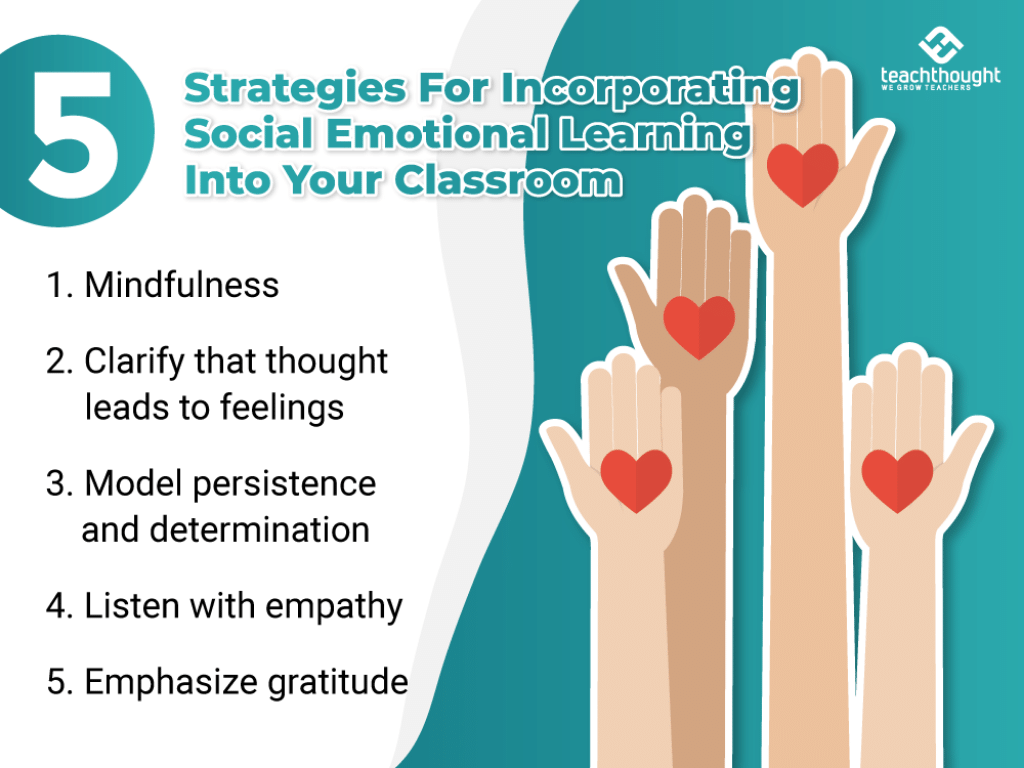
5 Strategies For Incorporating Social-Emotional Learning Into Your Classroom 


1. Through mindfulness


Mindfulness is: paying attention, in a particular way, on purpose, in the present moment, non-judgmentally.


We are hearing more and more about the benefits of mindfulness for children. Increased attention leads to better performance academically and increased emotional and social intelligence. Children are better able to learn, nurture themselves, and be aware of their own emotional needs.


Mindfulness practices help students focus on their breath, body, thoughts, feelings, and the world around them. When they can observe their thoughts and feelings, they have the freedom to choose how they will speak and act–which can lead to a happier, more harmonious classroom.


There are many mindfulness activities available for free–on YouTube, for example. Further, there are mindfulness and meditation apps that can provide frameworks for getting started. Why not start each lesson with a different mindfulness...   Sumber: Baca selengkapnya

Tulis ulang artikel berikut ke dalam bahasa Indonesia yang rapi, mudah dipahami, gaya formal pendidikan, minimal 300 kata:

contributed by Meg Price, the ei experience

Social-emotional learning (SEL) by definition is a process for learning life skills, including how to deal with oneself, others, and relationships, and work in an effective manner.

Although there are many great SEL programs, SEL can also be incorporated into each lesson as a way of teaching students to understand how to action the skills in a variety of situations and form positive habits. All students start school with some level of social and emotional skills, and all will develop their social and emotional skills at different rates.

Parents and teachers are both responsible for teaching students life skills, and certainly, much of what they learn will be by watching our actions. The five strategies below are will not only benefit students’ social-emotional learning, but can also be beneficial to teachers’ well-being, too.

See also The Benefits Of Social-Emotional Learning

5 Strategies For Incorporating Social-Emotional Learning Into Your Classroom

1. Through mindfulness

Mindfulness is: paying attention, in a particular way, on purpose, in the present moment, non-judgmentally.

We are hearing more and more about the benefits of mindfulness for children. Increased attention leads to better performance academically and increased emotional and social intelligence. Children are better able to learn, nurture themselves, and be aware of their own emotional needs.

Mindfulness practices help students focus on their breath, body, thoughts, feelings, and the world around them. When they can observe their thoughts and feelings, they have the freedom to choose how they will speak and act–which can lead to a happier, more harmonious classroom.

There are many mindfulness activities available for free–on YouTube, for example. Further, there are mindfulness and meditation apps that can provide frameworks for getting started. Why not start each lesson with a different mindfulness…


Sumber: Baca selengkapnya

Ringkas artikel ini ke dalam bahasa Indonesia yang jelas dan formal maksimal 120-150 kata: contributed by Meg Price, the ei…

Read More
Tulis ulang artikel berikut ke dalam bahasa Indonesia yang rapi, mudah dipahami, gaya formal pendidikan, minimal 300 kata: 
	
Learning Japanese can be an exciting journey, full of new sounds, characters, and cultural insights. 


Whether you are starting from scratch or aiming to improve your fluency, finding the right approach makes all the difference.


From understanding the writing system to improving your listening skills, every aspect of language learning requires guidance and practice. Choosing a supportive environment with experienced instructors can accelerate your progress while keeping the process enjoyable.


Courses designed for every learner


Japanese courses are crafted to meet diverse learning goals. Some focus on daily conversation, others on reading and writing, and some on business communication. A well-structured course ensures that learners gradually build confidence while mastering new skills.


At italki, students can select from a wide range of courses that suit their needs and pace. With lessons tailored to your personal goals, learning becomes more engaging and effective.


Finding the right online Japanese teacher is simple, as italki offers a variety of instructors with different specializations. You can filter teachers based on experience, teaching style, and availability, ensuring the perfect match for your learning journey.


Choosing the right teachers


Teachers play a crucial role in language acquisition. A skilled instructor can clarify complex grammar points, provide real-time feedback, and motivate you to push past challenges.


italki hosts thousands of certified and professional teachers who offer personalized lessons. Their experience ranges from beginner guidance to advanced proficiency coaching.


When exploring options, you can read teacher profiles, watch introduction videos, and check reviews from other learners. This ensures that your sessions are not only educational but also enjoyable, fostering a positive learning environment.


Mastering writing and reading


Japanese writing includes kanji, hiragana, and katakana, which...   Sumber: Baca selengkapnya

Tulis ulang artikel berikut ke dalam bahasa Indonesia yang rapi, mudah dipahami, gaya formal pendidikan, minimal 300 kata:

Learning Japanese can be an exciting journey, full of new sounds, characters, and cultural insights.

Whether you are starting from scratch or aiming to improve your fluency, finding the right approach makes all the difference.

From understanding the writing system to improving your listening skills, every aspect of language learning requires guidance and practice. Choosing a supportive environment with experienced instructors can accelerate your progress while keeping the process enjoyable.

Courses designed for every learner

Japanese courses are crafted to meet diverse learning goals. Some focus on daily conversation, others on reading and writing, and some on business communication. A well-structured course ensures that learners gradually build confidence while mastering new skills.

At italki, students can select from a wide range of courses that suit their needs and pace. With lessons tailored to your personal goals, learning becomes more engaging and effective.

Finding the right online Japanese teacher is simple, as italki offers a variety of instructors with different specializations. You can filter teachers based on experience, teaching style, and availability, ensuring the perfect match for your learning journey.

Choosing the right teachers

Teachers play a crucial role in language acquisition. A skilled instructor can clarify complex grammar points, provide real-time feedback, and motivate you to push past challenges.

italki hosts thousands of certified and professional teachers who offer personalized lessons. Their experience ranges from beginner guidance to advanced proficiency coaching.

When exploring options, you can read teacher profiles, watch introduction videos, and check reviews from other learners. This ensures that your sessions are not only educational but also enjoyable, fostering a positive learning environment.

Mastering writing and reading

Japanese writing includes kanji, hiragana, and katakana, which…


Sumber: Baca selengkapnya

Ringkas artikel ini ke dalam bahasa Indonesia yang jelas dan formal maksimal 120-150 kata: Learning Japanese can be an exciting…

Read More