Ringkas artikel ini ke dalam bahasa Indonesia yang jelas dan formal maksimal 120-150 kata: Bloom’s Revised Taxonomy: cognitive process dimension…
Read More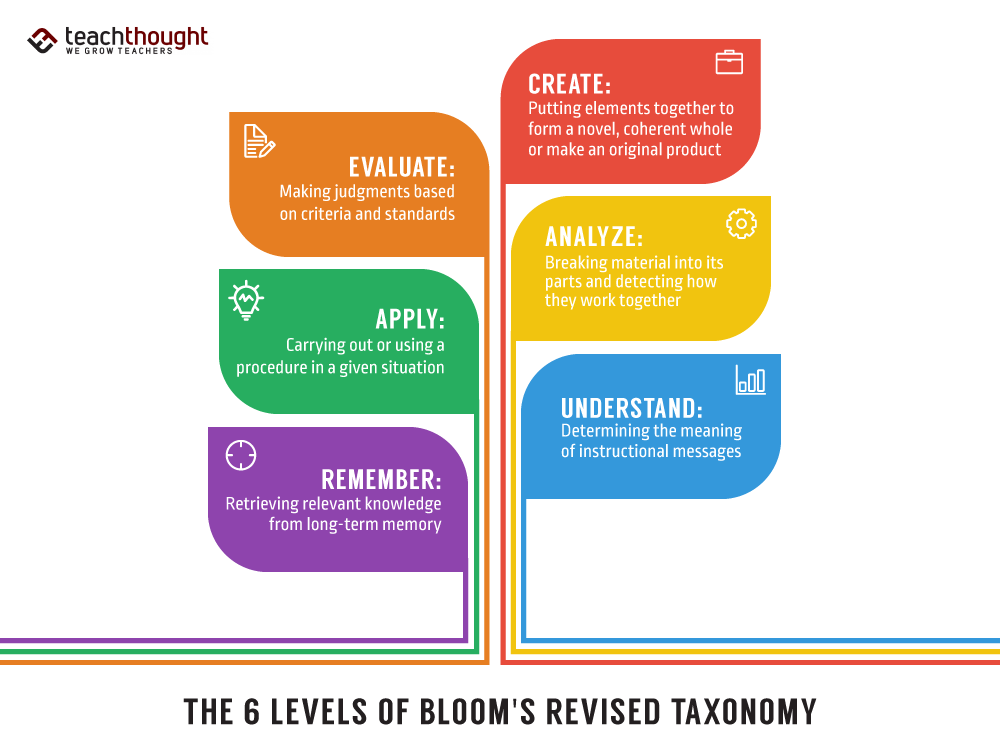
Tulis ulang artikel berikut ke dalam bahasa Indonesia yang rapi, mudah dipahami, gaya formal pendidikan, minimal 300 kata:
Bloom’s Revised Taxonomy: cognitive process dimension
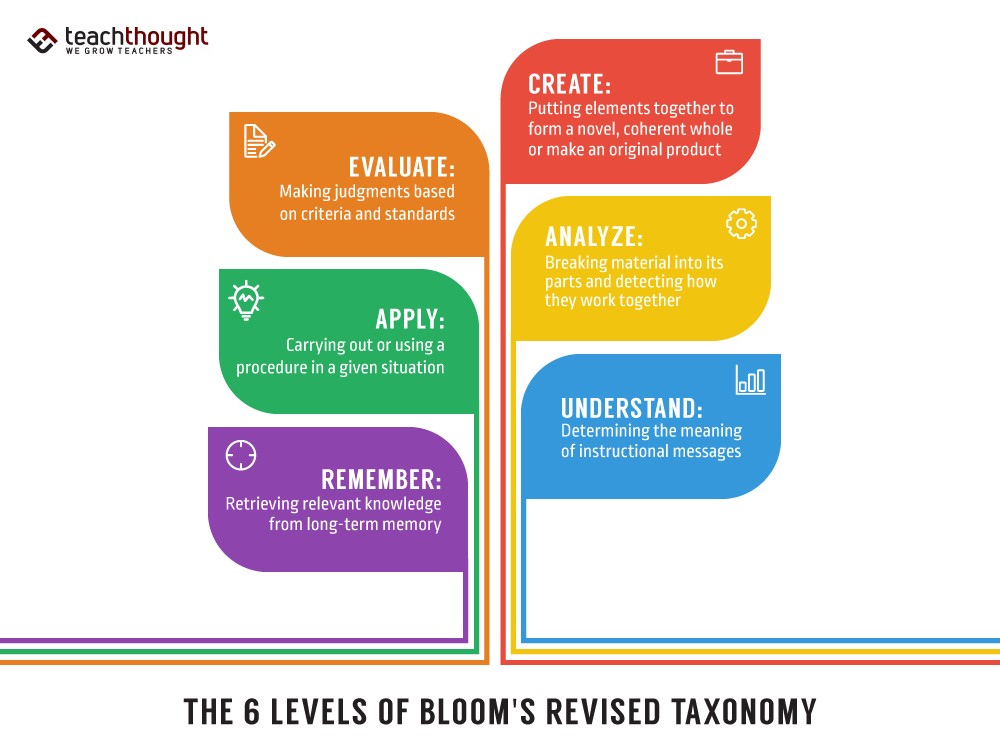
Bloom’s Revised Taxonomy changed the original 1956 framework by updating the level names to verbs, reordering the top levels, and adding a second dimension for types of knowledge. The revision clarifies what students do cognitively and how those actions interact with factual, conceptual, procedural, and metacognitive knowledge.
How Bloom’s Taxonomy Changed
- Nouns to verbs: levels reframed as cognitive actions: Remember, Understand, Apply, Analyze, Evaluate, Create.
- Top-level reorder: Create placed above Evaluate to reflect generative thinking.
- Two dimensions: pair the Cognitive Process with the Knowledge Dimension (Factual, Conceptual, Procedural, Metacognitive).
- Clearer alignment: objectives, instruction, and assessment mapped with the Taxonomy Table.
- Modernized language: Comprehension becomes Understand; Knowledge becomes Remember.
- Planning impact: encourages task verbs and evidence of learning rather than category labels.
Original vs Revised Level Names
Original (1956)
Revised (2001)
Knowledge Remember Comprehension Understand Application Apply Analysis Analyze Synthesis Create Evaluation Evaluate
What Changed Beyond the Words
The revision introduced the Taxonomy Table: a grid that crosses six cognitive processes with four knowledge types. This helps teachers specify outcomes and assessments more precisely, for example, Analyze x using conceptual knowledge or Apply y using procedural knowledge.
- Knowledge Dimension: Factual, Conceptual, Procedural, Metacognitive.
- Process–knowledge pairing: clarifies task design and evidence quality.
- Assessment implications: verb choice signals expected thinking and scoring focus.
Why It Was Revised
From 1995 to 2000, a team led by Lorin Anderson and David Krathwohl updated Bloom’s…
Sumber: Baca selengkapnya
Bloom’s Revised Taxonomy changed the original 1956 framework by updating the level names to verbs, reordering the top levels, and adding a second dimension for types of knowledge. The revision clarifies what students do cognitively and how those actions interact with factual, conceptual, procedural, and metacognitive knowledge.
How Bloom’s Taxonomy Changed
- Nouns to verbs: levels reframed as cognitive actions: Remember, Understand, Apply, Analyze, Evaluate, Create.
- Top-level reorder: Create placed above Evaluate to reflect generative thinking.
- Two dimensions: pair the Cognitive Process with the Knowledge Dimension (Factual, Conceptual, Procedural, Metacognitive).
- Clearer alignment: objectives, instruction, and assessment mapped with the Taxonomy Table.
- Modernized language: Comprehension becomes Understand; Knowledge becomes Remember.
- Planning impact: encourages task verbs and evidence of learning rather than category labels.
Original vs Revised Level Names
| Original (1956) | Revised (2001) |
|---|---|
| Knowledge | Remember |
| Comprehension | Understand |
| Application | Apply |
| Analysis | Analyze |
| Synthesis | Create |
| Evaluation | Evaluate |
What Changed Beyond the Words
The revision introduced the Taxonomy Table: a grid that crosses six cognitive processes with four knowledge types. This helps teachers specify outcomes and assessments more precisely, for example, Analyze x using conceptual knowledge or Apply y using procedural knowledge.
- Knowledge Dimension: Factual, Conceptual, Procedural, Metacognitive.
- Process–knowledge pairing: clarifies task design and evidence quality.
- Assessment implications: verb choice signals expected thinking and scoring focus.
Why It Was Revised
From 1995 to 2000, a team led by Lorin Anderson and David Krathwohl updated Bloom’s…